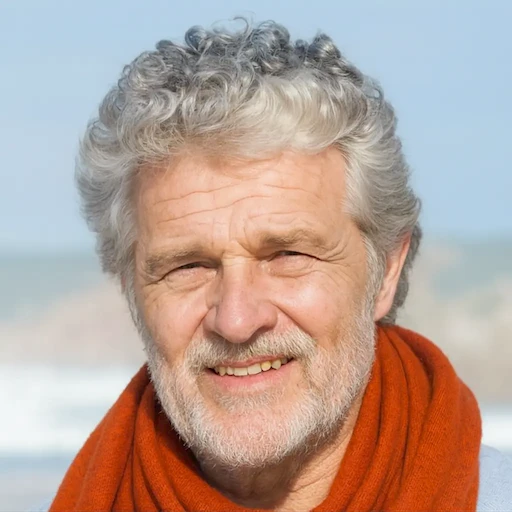

Contributing Editor:
Reviewed and Approved by:


I am fifty-three years old, I hold a senior position in banking, and I have recently started narrative writing therapy. That last sentence took me longer to write than the rest of my career history combined.
I was seven when my parents left. An only child, I came home to an empty house and the particular silence that tells you something permanent has happened. They had gone to New Zealand. I was taken into social care and placed for adoption. That did not work out. Between the ages of eight and fifteen, I lived with eight different foster families. I do not say this for sympathy — I say it because it is the foundation everything else was built on, including this list.
By sixteen I was working to fund my own way. By my early twenties, I had a university degree and a position in financial services. I built a career on clear thinking, disciplined attention, and the ability to keep moving. I was good at those things. I still am. What I am only now beginning to learn is that the very momentum I relied on to survive my childhood — the relentless forward motion — became, eventually, the thing standing between me and the rest of my life.
These are eleven things I know to be true. Some of them I learned in the boardroom. Some of them I am learning now, in a therapist’s room, with a pen in my hand and a great deal of ground still to cover.

1. Reflection
For most of my life, I did not stop to reflect. Stopping felt dangerous. The child who stops moving has time to notice what is missing, and I had learned early that noticing what was missing did not help anything.
It is different now. I made a decision on New Year’s Day 2025 — one of those resolutions that feel different from the others, the kind you make quietly and mean completely. I started narrative writing therapy. It asks you to go back, slowly, to the places you kept walking past. I am finding that reflection is not the enemy of progress. It is the thing that makes progress real rather than just motion. To sum up your day, your year, your life — to see what worked and what did not — is not weakness. It is the most honest form of intelligence I know.
2. Direction
I have always known how to set a direction professionally. A clear sense of where you are going makes decisions easier. It organises your energy and your attention. I rose through every organisation I worked for because of this, and I stand by it.
What I am sitting with now is a quieter question: in all those years of knowing exactly where I was going at work, did I ever ask myself the same question about my own life? About what I actually needed? Direction without that dimension is productivity. I had plenty of productivity. The direction I am learning to set now runs inward.
3. Detachment
Not everything requires your emotional investment. This is true, and it is something I learned young — perhaps too young, and perhaps too thoroughly.
A child who passes through eight households in seven years learns to travel light emotionally. You do not fully unpack if you know you may be moved again. That skill kept me functional. It also kept me at a certain distance from people I might have let closer. The version of detachment I am working towards now is more precise: indifferent to what does not serve me, but present — genuinely present — with what does. The two things look similar from the outside. They feel very different.
4. Communication
Clear, calm, open communication matters. I have practised this in meeting rooms and negotiations for thirty years. I am reasonably good at it.
I am less practised at communicating my own needs. Eight sets of foster carers, each with their own rules and rhythms and expectations, teaches a child to read the room and adapt rather than to speak plainly about what they need. It is a useful skill in a negotiation. It is a less useful skill in an intimate relationship. I have had several short-term relationships, each of which ended before it could deepen into something that required more of me. I am beginning to understand why. Listening to truly understand — including listening to yourself — is a lifelong practice, and I am late to it.

5. Responsibility
Taking responsibility for your actions gives you control of your direction. This I believe completely. It was the principle that got me out of a situation that could have defined me as a victim and allowed me instead to build something. I took responsibility for my education, my income, my career, my life. No foster family funded my university. I did.
And yet. There is a version of this principle that can become a trap for survivors. The seven-year-old standing in an empty house did not cause his parents to leave. He was not responsible for that. Part of what I am learning now is the difference between the responsibility that builds you up — taking ownership of what you can shape — and the misplaced responsibility that survivors sometimes carry for things that were never theirs to carry at all.
6. Adaptability
I adapted to eight different households. I adapted to a university where most students had families to call. I adapted to the culture of a financial institution, and then another, and then another as I rose. I adapted when the markets moved and when the regulations changed and when the people around me did not.
Adaptability is not just a professional skill. It is what kept me alive in a childhood that was genuinely unstable. I do not say that with drama; I say it with something close to respect for the child I was. He was extraordinary at this. Knowing that I can adapt — that I always have — is, on the harder days of therapy, a real source of steadiness.
7. Simplicity
Complex strategies create unnecessary stress. I learned this managing large teams and large numbers. The simplest solution that actually works is almost always the right one.
I am applying this now to the interior work. Narrative writing therapy is not complicated. You write. You read what you have written. You notice what it says. There is no elaborate architecture to it. The complexity comes from the material itself, not the method. I find that reassuring.
8. Thought Control
What you think determines how you act more than what happens to you. I have tested this principle against significant circumstances and found it to hold.
For a long time, I managed my thinking by simply not directing it towards certain things. That is not thought control. That is avoidance, and it is surprisingly effective at the cost of a significant amount of energy. Real thought control — the kind I am learning — means looking at the difficult thought rather than steering around it. Monitoring it. Understanding where it comes from. And then, as far as possible, choosing what you do with it. This is harder than the version I practised for thirty years. It is also, I suspect, the actual version.

9. Self-Respect
How you treat yourself is a precursor to how others will treat you. Respect your limits, your needs, your values.
I read this back and I recognise how straightforward it sounds. I also know that for anyone whose first caregivers communicated, through action rather than words, that they were not worth staying for — the project of genuine self-respect is not straightforward. It is years of quiet, patient work. I am somewhere in the middle of that work. I know my professional worth with precision. I am still learning the other kind.
10. Energy Management
Sustained energy matters more than constant activity. Protect your focus, your time, your emotional reserves.
I ran on adrenaline for a long time. It is a reasonable fuel source until it stops being one. I am learning to protect what genuinely sustains me: time in nature, early mornings before the day’s demands arrive, the writing itself. The work diary gets scheduled with precision. The rest is only recently starting to receive the same care.
11. Time Value
Time is the one resource that cannot be replaced. Invest it in what truly matters.
I am fifty-three. I have spent a great deal of time being very effective at things that mattered professionally. I do not regret the career; I built something real and I take pride in it. But I spent less time than I should have on the question of what I actually needed to heal. The busy life was, in retrospect, also a way of not sitting still long enough to feel the weight of what had happened.
I am sitting still now. It is uncomfortable and it is necessary and it is, I am told by people who have done more of it than I have, worth it.
There is one other way I am choosing to spend my time. Every fortnight I volunteer at a youth club for children in foster care. I sit with them, I listen, I show up. I do not have a great deal of language for what I am doing there, except that someone once should have done it for me, and nobody did. The children do not need me to be extraordinary. They need me to come back. That, I can do.

I wrote these eleven reminders for you. I also wrote them for myself. If you are someone who has built a functional life on the surface of a pain you have not yet had time to address — if you recognise the particular efficiency of keeping yourself too busy to feel — then perhaps this is useful to read.
You do not have to burn the career down or the life you constructed. But at some point, the motion has to slow enough that you can look at what you built it on top of.
Taking a breath is a good place to start.
Joseph K is a survivor, a senior banking executive, and a contributing author at Survive Child Abuse. He began narrative writing therapy in January 2025 and volunteers fortnightly at a youth club for children in foster care.